
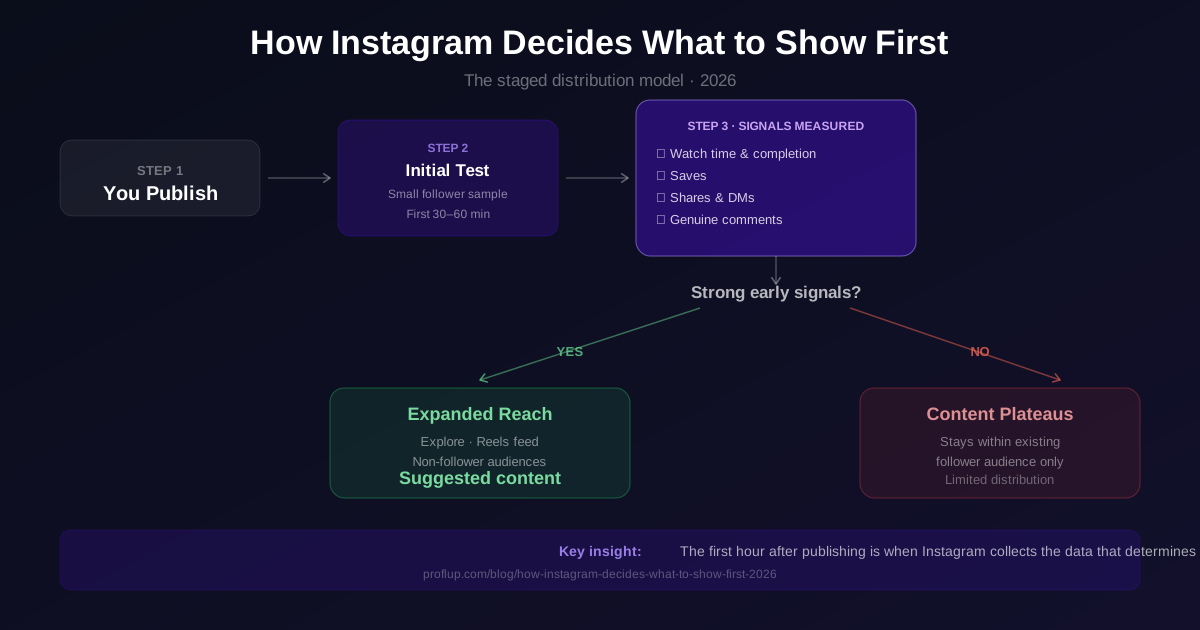
Instagram decides what to show first based on how likely you are to engage with each piece of content. The Feed prioritizes relationship strength: who you message, comment on, and visit most. Reels prioritizes watch time and DM shares. Stories prioritizes viewing history and recency. Explore prioritizes engagement velocity and interest matching. There is no single algorithm. Instagram confirmed three signals that matter across all surfaces in 2026: watch time, sends per reach, and likes per reach. Early engagement in the first 30 to 60 minutes after posting is when each system runs its first distribution test.
The Instagram algorithm is a collection of separate AI ranking systems. One for Feed, one for Reels, one for Stories, one for Explore. Each is designed for a different part of the app and a different type of user intent. None of them is “the algorithm.” Understanding which system is ranking your content, and what signals that specific system weighs, is the starting point for any serious Instagram growth strategy in 2026.
- → Instagram uses 4 separate AI ranking systems. Feed, Reels, Stories, and Explore each evaluate different signals.
- → The 3 confirmed cross-surface signals (Adam Mosseri, Jan 2025): watch time, sends per reach, and likes per reach.
- → Feed shows accounts you follow first, ranked by relationship strength. DMs and comments matter most.
- → Reels distribution to non-followers is driven by completion rate and DM shares, not follower count.
- → The first 30 to 60 minutes after posting is Instagram’s primary evaluation window. Engagement velocity then determines whether distribution expands.
- → Posting 10 or more reposts in 30 days results in complete exclusion from Explore and Reels recommendations.
Why There Is No Single Instagram Algorithm
Every conversation about “gaming the algorithm” starts from the wrong premise. There isn’t one. Instagram uses multiple AI ranking systems, separate models for each part of the app, optimized for different user behavior patterns.
Instagram head Adam Mosseri has explained the logic directly: people use each surface differently. “People tend to look for their closest friends in stories, use explore to discover new content and creators, and be entertained in reels.” Different intent, different ranking logic. A Reel that goes viral in the Reels tab may barely appear in your followers’ main Feed. A post your most engaged followers save and share may not reach Explore at all. Same post, completely different outcomes, because different systems are deciding each surface independently.
This distinction matters practically. If you’re trying to grow your follower count, Reels and Explore ranking matter most. If you’re trying to maintain visibility with existing followers, Feed and Stories ranking matter most. The strategies for each are different because the ranking signals are different.
How Instagram Decides What Shows First in Your Feed
The Feed algorithm ranks content from accounts you follow, plus some recommended posts, based primarily on relationship strength. Instagram is predicting how likely you are to engage with each post based on your history with that creator and with similar content.
The five interaction signals Instagram weighs most heavily in Feed, confirmed by Mosseri: how likely you are to spend a few seconds on a post, comment on it, like it, share it, and tap on the profile photo. The more likely you are to take any of these actions, the higher the post ranks in your Feed.
What drives those predictions:
- Relationship history. How often you have liked, commented, DMed, or visited that account’s profile recently. DM conversations are one of the strongest relationship signals. If you message someone regularly, their posts appear near the top of your Feed. Building genuine community interaction is the actual Feed growth mechanic, not chasing likes.
- Your engagement patterns. What you watch, save, and share tells Instagram what you want to see more of. Someone who consistently saves cooking carousels will see more cooking carousels from followed accounts, regardless of how long ago that account posted.
- Post velocity. How quickly a post accumulates engagement after publishing. Posts that gain rapid early likes, comments, and shares get surfaced higher in the feeds of non-engaged followers. This is the mechanism behind engagement velocity. Early signals matter disproportionately.
- Content type preference. Instagram tracks whether a user engages more with videos, photos, or carousels and weights their Feed accordingly.
- Recency. Newer posts generally rank above older ones, all else equal. But relationship strength can override recency. A post from someone you message daily will appear above a post from an account you last engaged with three months ago.
What Instagram suppresses in Feed: back-to-back posts from the same creator, content users rapidly scroll past, posts that accumulate “Not Interested” signals, and accounts with recent Community Guidelines violations.
How Instagram Decides What Gets Distributed via Reels
Reels ranking works entirely differently from Feed. The purpose is discovery, reaching people who do not follow you. When you post a Reel, Instagram runs what functions like an audition. It tests the content with a small group of non-followers whose interests match your content category. How that group responds determines whether the Reel gets pushed to a wider audience or stays narrow. The audition happens fast. Most of the evaluation is complete within the first 30 to 60 minutes.
The signals Instagram weighs most heavily for Reels distribution:
- Completion rate. What percentage of viewers watch to the end. Above 50 percent is performing well. A Reel someone abandons in the first three seconds signals low quality and the system kills distribution quickly. The hook is not just a creative choice. It is an algorithmic one.
- Replay rate. Whether viewers watch more than once. A 15-second Reel watched three times generates 45 seconds of total watch time. Instagram weights replay positively because it signals content worth returning to.
- Sends per reach. DM shares. Mosseri confirmed in January 2025 that sends per reach are 3 to 5 times more valuable than likes for non-follower distribution. A Reel people share with friends signals it is worth showing to strangers.
- Audio fit. Instagram’s AI reads the audio in your Reel to categorize content for recommendation. Clear speech with relevant keywords improves discoverability in Explore and Search.
- Originality. Accounts posting 10 or more reposts within 30 days are excluded from Explore and Reels recommendations entirely. Original content receives 40 to 60 percent more distribution than reposts. TikTok watermarks automatically suppress a Reel’s distribution.
Raw view count is a poor proxy for Reel performance. A Reel with 50,000 views and a 20 percent completion rate is performing worse algorithmically than a Reel with 5,000 views and a 70 percent completion rate. For creators using tools like ProflUp’s automatic Instagram likes subscription: likes from real accounts in the early evaluation window feed a genuine signal into the audition. Real accounts that engage may also save, share, or visit your profile, producing secondary signals that compound the initial velocity boost. That is the meaningful difference between real-account delivery and bot delivery.
How Instagram Decides What Shows First in Stories
Stories rank exclusively from accounts you follow. The ranking within that pool is based on closeness signals. Three primary signals drive it: viewing history (how consistently you watch that account’s Stories), engagement history (DMs, reactions, and replies, which are among the strongest relationship signals on the platform), and recency (more recently posted Stories rank above older ones within the same relationship tier).
A significant 2026 update: high Story engagement now cross-references with Feed ranking. Accounts whose followers consistently engage with their Stories see their Feed posts ranked higher for those same followers. Stories are no longer just a 24-hour awareness format. They are a Feed ranking mechanism for your existing audience.
How Instagram Decides What Appears on Explore
Explore is built for discovery, surfacing content from accounts you do not follow. The key signals: engagement velocity among non-followers (how quickly a post accumulates engagement from accounts that do not follow the creator), topical consistency (accounts that post consistently within a specific niche receive topical authority signals, while jumping between unrelated topics confuses the interest-matching system), saves and shares (stronger Explore distribution signals than likes), and originality (10 or more reposts in 30 days results in full Explore exclusion).
The Early Engagement Window
One principle is consistent across all four surfaces: Instagram evaluates content with a small initial audience first, then decides whether to expand distribution. For Feed posts and Reels, the critical window is the first 30 to 60 minutes after publishing.
Posts that accumulate likes, saves, shares, and comments quickly in that window signal genuine resonance. Posts that receive little engagement in that window are treated as low-relevance and distribution stays narrow. The window closes. Later engagement carries less algorithmic weight than the same engagement would have in the first hour.
This is the mechanism that ProflUp’s instagram views service and automatic likes are designed to feed into. Real engagement from real accounts, delivered within 60 seconds of publishing, specifically to land inside that evaluation window. A like from a real account in the first 30 minutes carries more algorithmic weight than the same like two days later, because the early window is when the ranking systems are actively evaluating whether to expand or constrain reach.
What This Means for Automatic Instagram Likes Services
Services like ProflUp, Buzzoid, StormLikes, and BlastUp are designed specifically around the early engagement window mechanism. When you publish a post, the service detects it within 30 to 60 seconds and delivers likes from real accounts during the period when Instagram is actively evaluating whether to expand distribution.
Subscription-based services produce consistent signal patterns over time. Every new post gets automatic early-window engagement. An account that consistently achieves good early-window performance builds a reliable pattern the algorithm can factor into distribution decisions. An account that boosts some posts and ignores others creates inconsistency that actually suppresses organic reach on unboosted posts.
ProflUp, formerly AutolikesIG.com with over a decade of operating history in the automatic engagement category, has built its Engagement Velocity Framework entirely around these early-window mechanics, structuring how to optimize every post for the evaluation period that determines whether Instagram expands or constrains distribution.
ProflUp detects new posts within 60 seconds and delivers automatic likes from real accounts, timed specifically to land inside Instagram’s early evaluation window, on every post you publish.
Frequently Asked Questions
- Does Instagram use one algorithm or multiple?
Multiple. Instagram uses separate AI ranking systems for Feed, Reels, Stories, Explore, and Search. Each evaluates different signals. Content that performs well on one surface may barely appear on another. - What are the most important Instagram ranking signals in 2026?
Adam Mosseri confirmed three in January 2025: watch time, sends per reach (DM shares), and likes per reach. Reels prioritizes watch time and sends. Feed prioritizes relationship strength. Stories prioritizes viewing history and recency. - Why does content from some accounts always appear first in my Feed?
Because you have a strong relationship signal with those accounts. You like, comment, DM, or visit their profiles consistently. The Feed algorithm is primarily a relationship-strength ranking system. - How does Instagram decide whether to push a Reel to non-followers?
Through an audition mechanism. Instagram tests the Reel with a small group of non-followers whose interests match your content. If that group watches to completion, shares, or replays, distribution expands. If they scroll past quickly, distribution stays narrow. Most of this evaluation happens in the first 30 to 60 minutes after posting. - Do DM shares really matter more than likes for the algorithm?
For Reels specifically, yes. Mosseri confirmed that sends per reach are 3 to 5 times more valuable than likes for non-follower distribution. A Reel people share via DM signals to the algorithm that it is worth showing to more people who do not yet follow the creator. - Does the Instagram algorithm penalize business accounts?
No. Instagram has confirmed that account type does not affect reach or ranking. Business, creator, and personal accounts are ranked by the same engagement and relevance signals. - Why does topical consistency matter for Instagram growth?
Instagram’s interest-matching system builds topic clusters around accounts. Consistent posting within a specific niche helps the system accurately match your content with audiences who engage with similar topics. Accounts that jump between unrelated topics confuse the interest-matching logic and receive weaker distribution. - What happens if I repost TikTok content on Instagram?
Reels with visible TikTok watermarks are systematically deprioritized. Instagram uses AI fingerprinting to detect cross-posted content. Export a clean version without platform-specific watermarks before uploading to Instagram.
🚀 Ready to Grow With ProflUp?
Pick the service that suits your goals and watch your Instagram growth take off.